
On Purification and Alienation
A travelogue

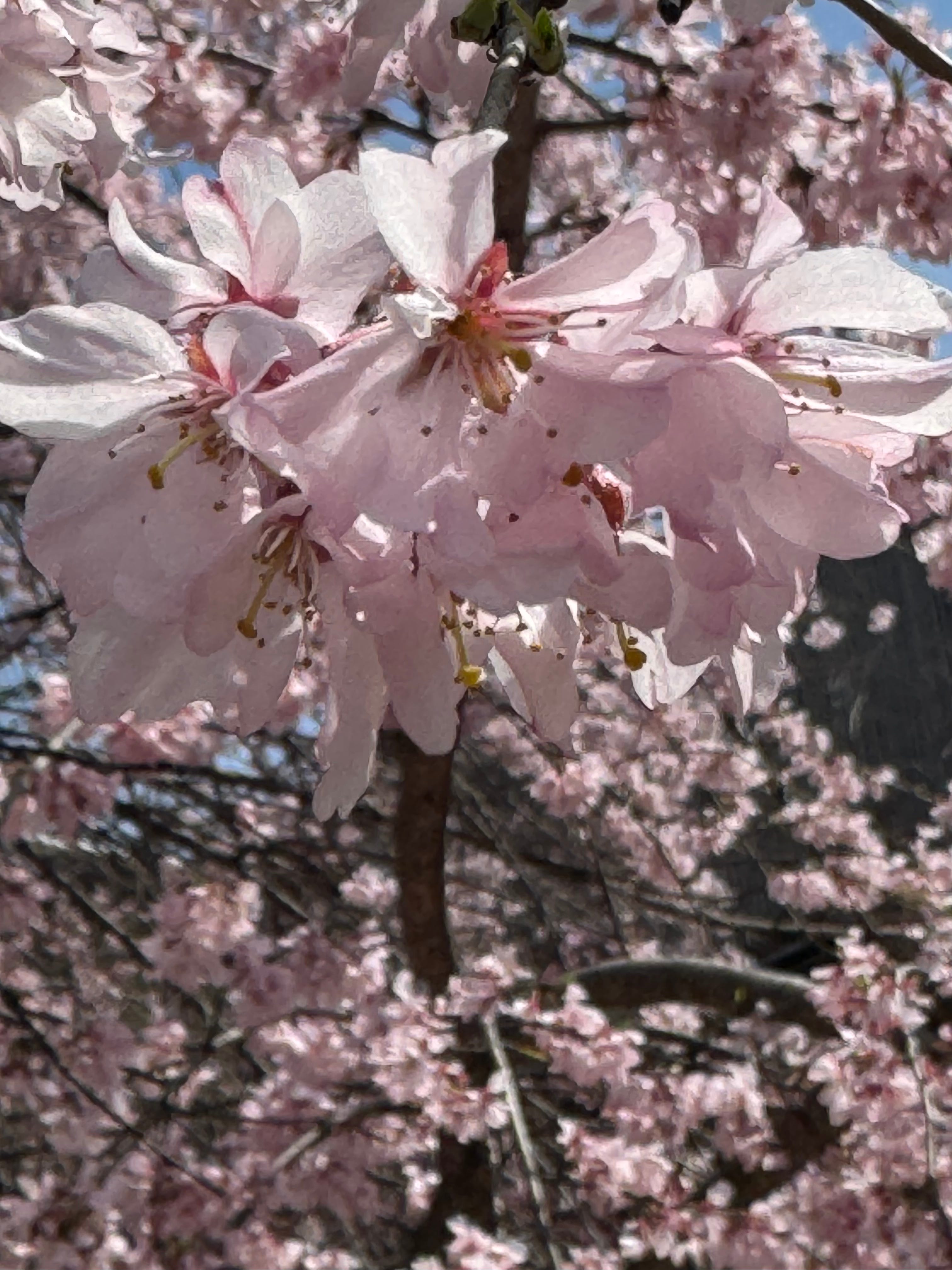
I recently returned from a three week trip to Japan. It was at the beginning of sakura season, the yearly Japanese celebration of all things cherry blossom, and also plums.
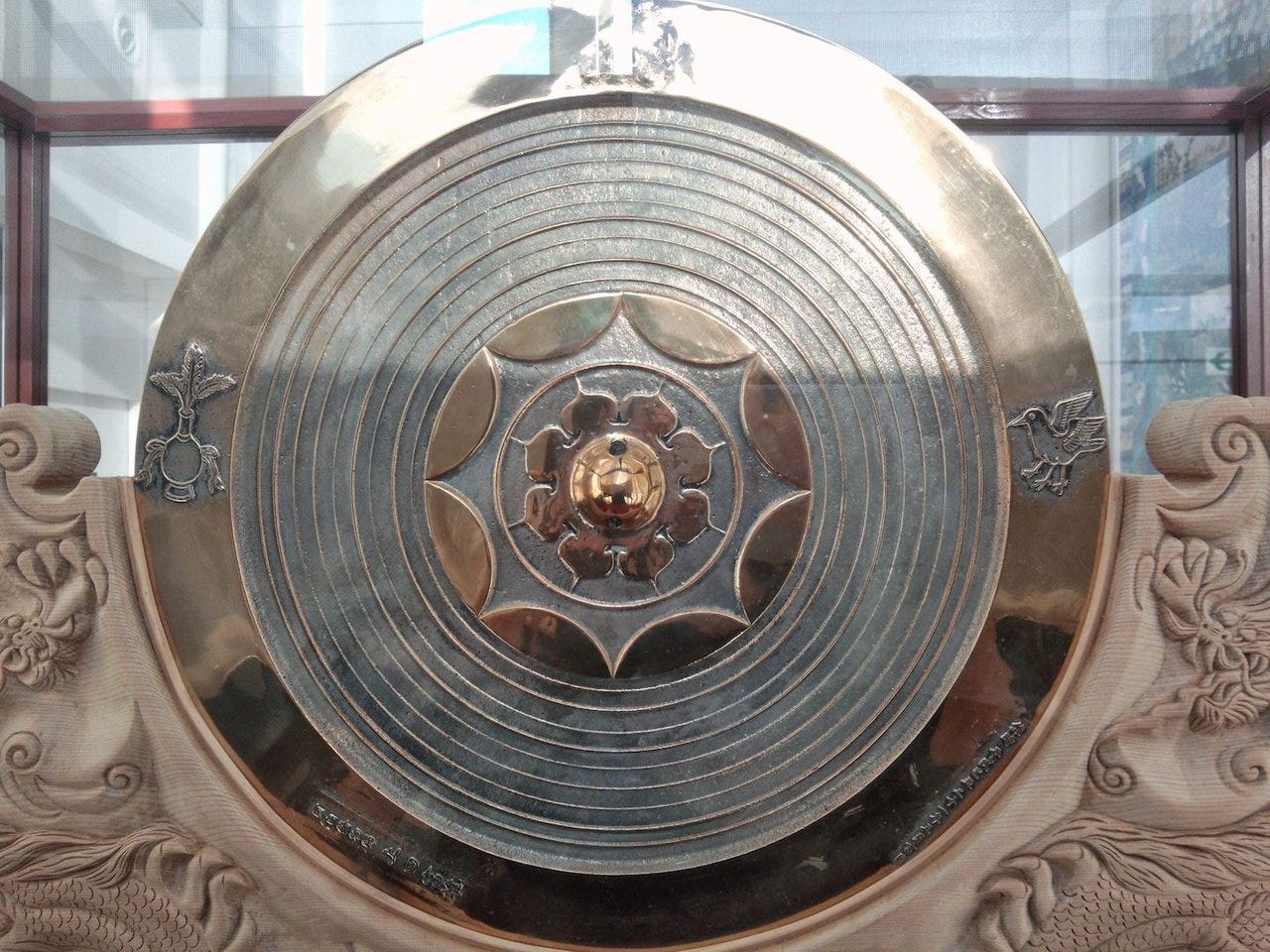
An important part of our visit was beginning at the Ise shrines, where, for the past 2000+ years, the sun goddess, Amaterasu Ōmikami, has been housed in one of the two major shrines in that city. Indeed, the first place we visited was the shrine of her parents, Izanagi and Izanami. They are the demiurges credited in the early 8th century record called the Kojiki with the creation of the Japanese Archipelago.
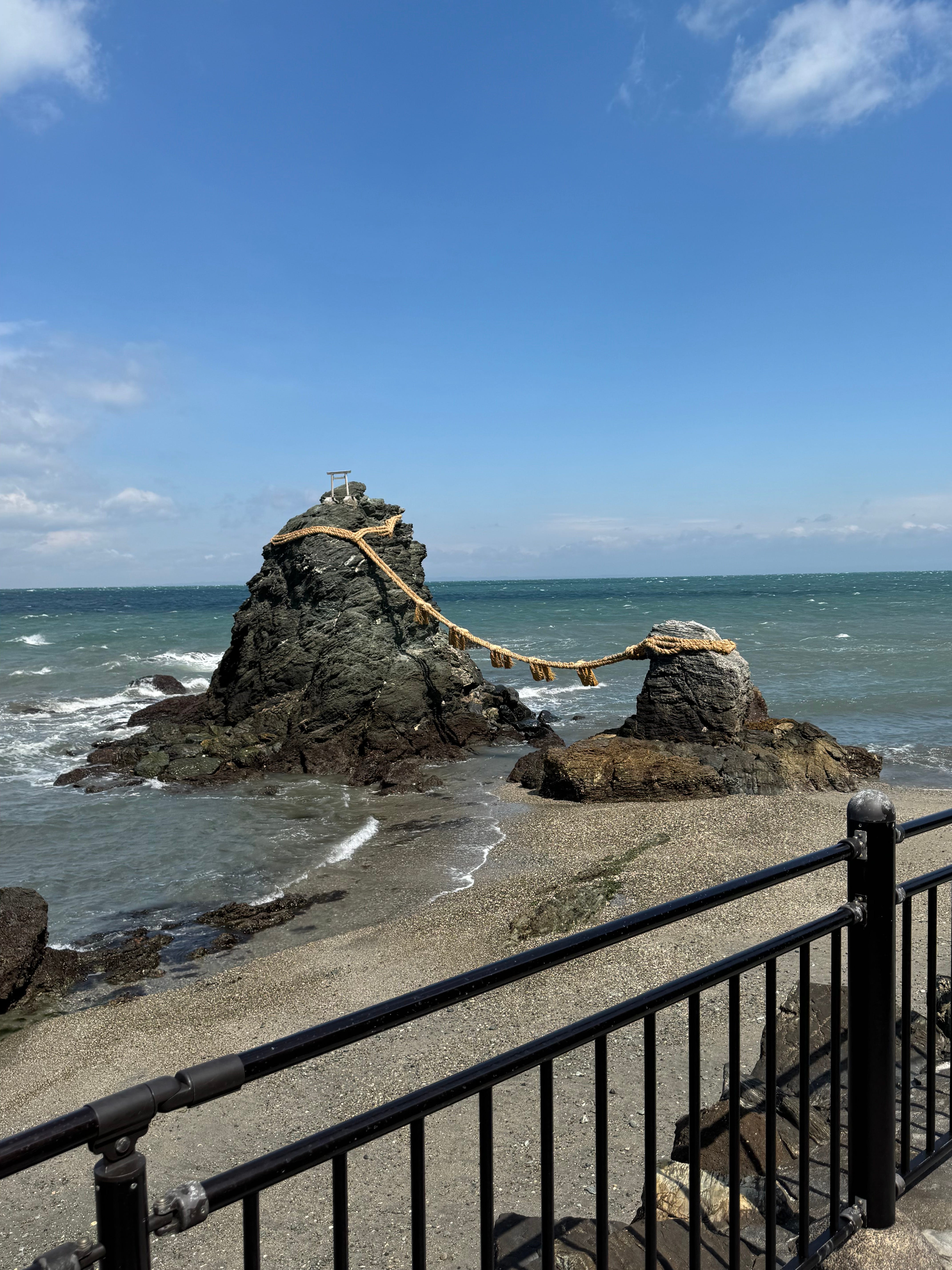
Thus, we began our visit to Japan first with a visit to the guardians of the Japanese nation.
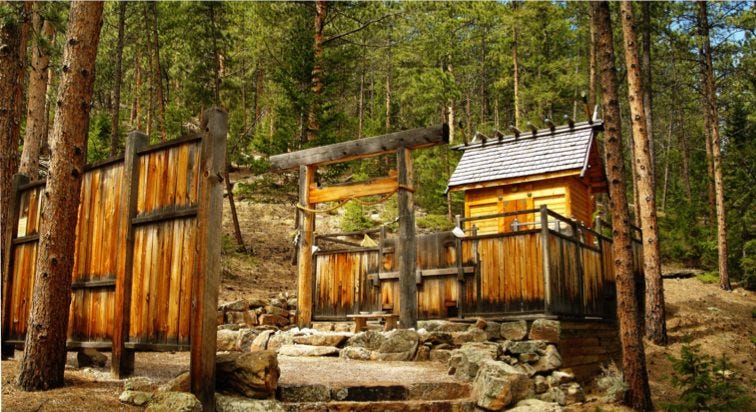
The background to this is that I had visited the outer shrine at Ise in 1986, on my first visit to Japan. Due to this, I have always felt an affinity for Shinto in general, and Amaterasu Ōmikami in particular. In 2023, when we visited Boulder to run a short program, as part of a visit to the Drala Mountain Center in Colorado the caretake of the temple told us about this small shrine present at DMC, which is dedicated to Amaterasu Ōmikami and three other important kami, Toyouke Ōmikami, the goddess of abundnce, Sarutahiko Ōkami, the head of the worldly kami, and his wife, Ame no Uzume no Mikoto. These are also the four main kami enshrined at the outer and inner shrines of Ise.
I was very strongly moved by this little Shinto shrine in the middle of nowhere in Colorado. Strangely, when there were intense fires burning in September, 2020, while several buildings were destroyed at DMC, the fire burned around this traditionally constructed wooden building, leaving it unscathed.
I really knew nothing about Shinto. On my first visit to Japan, in 1986, we wandered into Shinto shrines, and Buddhist temples. But I did not really understand the Shinto perspective at all. We bowed, washing our hands and mouths, bowed twice, offered a prayer, bowed again and went on our way, without really understanding what we were doing. I just knew is was important to pay respect to the local guardians of this country. But at the time I was more interested in the Buddhist temples that we had come to see.
On this visit, however, my interest in Shinto was very stimulated. I was curious to know the legends and lore surrounding this mysterious tradition.
In Tibetan Buddhism, of course, we have a long tradition of local guardians who support Dharma. And like the Japanese Buddhists, we also have a concept of mundane manifestations of Buddhas, for example, the idea that Shiva is a manifestation of Avalokitśvara, and so on. In this case, Amaterasu has been regarded as an emanation of Mahāvairocana Tathāgata by many Buddhists in Japan for over a millennia.
Modern Shinto presents itself as a nonreligious, universal tradition. It finds an affinity with all spiritual traditions, and welcomes all without distinction. Everyone is welcome to worship at these shrines in their own way, observing a very simple protocol.
Granted, there is a long tradition of shifting tension and cooperation between Buddhist and Shinto institutions. This reached its apogee with the political separation between Buddhist temples and Shinto shrines during the Meiji restoration, the creation of State Shinto, and rise in Japanese ultranationalism that lead to the war between the US and Japan in the 1940’s. Shinto and Japanese Buddhism are interrelated, and defining the boundaries between them can be difficult. But the fundamental difference, as articulated by Shintoists themselves, is that they view Shinto as the indigenous tradition of Japan, whereas Buddhism, Confucism, and Daoism are traditions of foreign origin.
The main thrust of Shinto is an appreciation for the natural world, for the rhythms of the seasons, the tides, planting, harvesting, and mundane prosperity and happiness in general. There are countless shrines and countless kami. There are kami in trees, boulders, lakes, and so on. When one encounters these thick braided ropes hung on trees and rocks, you can be sure this indicates, “A kami is enshrined here.”

The world of kami is deeply embedded in the Japanese psyche. But kami are not just gentle nature spirits, they can be wrathful and worldly, prone to passions and aggression. In general, Japanese Buddhists approach Shinto the same way Tibetan Buddhists approach paying respect to the eight classes. But the Shinto approach is to see that kami is a universal, vital principle that imbues everything. Everything comes from the kami. Humans in general are descendants of the kami. Like many Tibetan clans, many Japanese families, especially the emperors and empresses of Japan, trace their descent to the kami. In particular, the Japanese royal family claims direct descent from Amaterasu Ōmikami. On the other hand, Shinto also claims to be nondogmatic, there is no systematic Shinto theology, no theory of Shinto liberation or salvation.
So what are we doing when we pass through the torii, as picture above, the gate to the sacred precinct of a Shinto shrine? We are engaged in purifying ourselves. When we enter any Shinto shrine, we are first to bow at the torii. Then we are to proceed to a well, where fresh water is flowing. We first wash our left hand with a small dipper, then our right, and then in our left hand we take a palmful of water from the dipper, rinse our mouth and spit it out into the gravel beside the well. We approach the shrine precinct. We bow twice. We clap our hands twice to gain the attention of the resident kami. We pause for a moment, with hands together, offering a prayer. We bow again. And it is customary to toss a coin into the alms box. This concise purification ritual, called misogi, is said to come from Izanagi’s washing himself in water to cleanse himself of the taint of death after he visited his deceased wife, Izanami, in the underworld. In Shinto, death is a taboo. As mortal beings, we are all contaminated by death, and so we engage in this purification to cause the kami to heed us. In Shinto there are elborate rituals of misogi for cleansing body and spirit. When we wash our hands and mouths, or cross over running water, this symbolizes Izanagi’s misogi, cleansing himself of the taint of death.
In the pre-Buddhist Tibetan ritual of sang (bsangs) we offer the smoke of fragrant plants like juniper, and so on, to apologize to local guardians, nāgas and the like for the mistakes we have made in polluting the water, and so on. Indeed, the first sang offering by Padmasambhava was composed to cleanse the land of the taint of an illegitimate birth and afterbirth:
When Ācarya Padmasambhava was practicing at Chimpu cave at Samye, King Trisong Detsen had been in poor health for a long while, and in the land many unhappy omens arose, such as the trio of blights, frost, and hail, epidemics, famines, and so on. After the ministers consulted, since they needed either a doctor, a diviner, or an astrologer they investigated the root causes.
The doctor said “The root of the illness is not the four humors, the root is obscured. It seems like a sickness of impurity.” The diviner threw a divination and the astrologer did some calculations, and all agreed, saying, “The king and all the gods of the land are disturbed by a contamination of impurity.” However, the doctor, the diviner, and the astrologer did not know the cause and condition of the contamination
The king’s wife, Queen Monza Tricham had given birth to a illegitimate child, and the queen concealed the child, and gave it to a maid and said, “It is very important to hide the child, and you must not allow the child to be seen by anyone.”
The maid hid the child under a clay tile, but because it touched the belly of a local guardian, all the local guardians and gods of the country were disturbed because they had been touched by the contamination of impurity, and caused unhappiness for the kind and country.
Since that maid was touched by the contamination of impurity, her head and limbs all became lame. Having called on the doctor to explain, he said, “This is not a disease of the four humors, this is a contamination of impurity, but because I do not know with what you are contaminated, I have no other methods to alleviate your disease.”
Padmssambhava, when hearing of this, replied he had a method to remedy this problem and composed the following:
Kye!
All sentient beings are contaminated with the stupidity of ignorance.
The five wisdom deities are contaminated with the five afflictions.
The three doors are contaminated with with the nonvirtues of body, voice, and mind.
The ḍākinis of the the body are contaminated by broken discipline.
The vajra master is contaminated with broken samaya.
The ḍākinis are contaminated by stingy feasts and tormas.
The dharmapāla guardians are contaminated by leftover, damaged first portions.
The oath-bound guardians of the teachings are contaminated by envious accumulation.
The mamos of existence are contaminated by disturbances of samādhi.
The brothers and sisters are contaminated contaminated by disturbances of love and affection.
The gods for pacification are contaminated by disturbance of hatred.
The gods for increasing are contaminated by disturbance of pride.
The gods for power are contaminated by disturbances of desire.
The gods for destruction are contaminated by disturbances of jealousy.
The gods that clarify are contaminated by disturbances of ignorance.
The sensitive gods of the land are contaminated by burning dairy and meat.
The sensitive gods of travel are contaminated by the disturbance of fighting and enmity.
The sensitive gods of the house are contaminated by a filthy stove.
The gods that protect the monasteries are contaminated by ordure and filth.
In particular, the gods above, nāgas the below, and nyan in between are contaminated
by the impure afterbirth of an unclean woman,
the kitchen gods, the gods of the domestic animals, and householders are contaminated,
body, voice, and mind, and the war gods and ally gods are contaminated.
In this passage we see the idea that it is the unvirtuous activities of humans that contaminate the world and its beings.
Let’s contrast this idea with modern idea of purity, and why it is related to alienation. Because of the germ theory of disease, because of xenophobia, and because of our fixation on the Other, we constantly try to purify ourself through expelling “contaminants,’ not recognizing that we are the contaminant. Our clothes do not become dirty on their own. They become dirty because we wear them. If we put on dirty underclothes we feel disgusted by them. But in fact it is our own filth we are wearing.
Our modern approach to purification is based entirely on the sense that we do not contaminate the world, the world instead contaminates us. This sense of contamination that we experience further alienates us from the world, leading us into a deeper and deeper sense of disconnection and isolation.
I suggest that we need to take a page out of the Shinto and Buddhist playbook, and begin to see where the real problems today lay with our approach to the world. With the Shinto attitude, an indigenous attitude, we can embrace our natural world with respect and awe for the impermanent beauty that we are privileged to live amongst. An esteemed poet and Shinto scholar, Motoori Norinaga (1730-1801), emphasized the principle of mono no aware, for example, the appreciation of the sublime beauty of cherry blossoms because of how swiftly they perish. This ties into the Buddhist respect for all living things as ends for themselves, and never as means for us, which is the fundamental perspective of deep ecology. Shinto extends this respect even to things considered inanimate—places, rocks, trees, rivers, and so on—regarding the principe of kami, both diverse and unitary, unified under the principle of the sun.
If we are to survive modern civilization, we need to recover these ancient sensibilities.
Fabulous.
Incredible, thank you.